
Introduction
The digital economy has changed more rapidly in the last three years than it did in the previous decade combined. AI tools to make money online are no longer a futuristic concept reserved for tech giants. They have become an everyday toolkit that freelancers, students, small business owners, and side-hustlers use to save time, reduce costs, and unlock new income streams.
Artificial intelligence has introduced new avenues for earning money online. It also helps people improve their skills, enabling them to increase their earning potential and remain competitive in an evolving digital landscape.
Whether you are a content creator looking to scale your output, a freelancer trying to serve more clients without burning out, or someone exploring an entirely new online business, there is likely an AI-powered tool or digital product that can help you achieve your goals.
In this article, we have compiled a list of amazing AI tools to make money online and explained how they can help you build skills, increase productivity, and create new income opportunities.

AI Writing and Content Assistants
AI writing tools to make money online have matured well beyond simple grammar checking. Today’s assistants can help draft blog posts, product descriptions, social media captions, and even long-form reports, while leaving the final editing and voice to the human writer. Popular options in this space include ChatGPT, Claude, and Jasper — each offering different strengths depending on whether you need long-form drafting, conversational tone, or marketing copy. Freelance writers use these tools to speed up research and first drafts, while small business owners use them to keep a consistent content calendar without hiring a full marketing team.
How AI Tools Can Help You Earn Online
AI can reduce the time required for many digital tasks, but it does not replace the need for human judgment, communication, creativity, and quality control.
For example, a freelancer might use an AI writing assistant to create a first draft, then edit and fact-check the content before delivering it to a client. A web designer may use AI to speed up development while still handling the website’s structure, branding, responsiveness, and user experience.
The following table shows some practical opportunities:
| AI Category | What You Can Offer | Suitable For |
|---|---|---|
| AI Writing | Blog posts, product descriptions, social media content | Writers and marketers |
| AI Design | Graphics, presentations, thumbnails and marketing materials | Designers and creators |
| AI Voice | Voiceovers, AI receptionists and customer support systems | Agencies and technical freelancers |
| SEO Tools | Keyword research, audits and local SEO services | SEO freelancers |
| AI Website Builders | Business websites and landing pages | Web designers |
| Automation Tools | Business workflows and integrations | Automation specialists |
| AI Video Tools | Short videos, ads and social media content | Video creators |
The best option depends on your existing skills, the type of clients you want to serve, and how much time you are willing to spend learning.
1. Offer AI-Assisted Writing Services
Every business needs words — blog posts, product pages, email campaigns, social captions. Tools like ChatGPT, Claude, and Jasper can draft a first pass in seconds, but clients aren’t paying for a robot’s rough draft. They’re paying for content that sounds like their brand, is factually correct, and actually converts readers into customers.
Instead of marketing yourself as someone who “writes with AI,” package it as a full service:
- Research and outlining (using ChatGPT or Claude for structure)
- AI-assisted first draft
- Human editing for tone, accuracy, and flow
- SEO formatting with tools like Surfer SEO or Grammarly for final polish
This positions you as a content partner, not a prompt-typer — and it’s much harder for a client to replace you with a free chatbot.
2. AI Design and Graphics Platforms
Design tools like Canva AI, Adobe Firefly, and Midjourney let beginners produce graphics that used to require years of training. But raw AI output rarely fits a brand’s exact colors, tone, or message on the first try.
Freelancers who succeed here don’t just generate images — they refine them using Canva or Adobe Photoshop for final touch-ups:
- Social media graphics and carousels
- Presentation decks (built in Canva or Gamma)
- YouTube thumbnails
- Ad creatives and promotional banners
The AI speeds up production; your judgment about what actually fits the client’s brand is what gets paid for.
3. AI Voice Agents and Customer Response Systems
This is one of the fastest-growing niches for people with a bit of technical curiosity. Local businesses — clinics, salons, contractors, real estate agents — lose leads every day simply because nobody answers the phone or replies fast enough. Platforms like Retell AI, Vapi, and Bland AI now let freelancers build voice agents without deep coding knowledge.
An AI-powered receptionist or chat responder, connected to a scheduling tool like Cal.com or Calendly, can:
- Answer common questions instantly
- Collect a caller’s or visitor’s details
- Book appointments automatically
- Hand off qualified leads to the business owner via n8n or Make
This isn’t a plug-and-play product — it requires understanding how the business actually operates before you touch a single tool. That extra layer of understanding is exactly what separates a freelancer who gets repeat clients from one who doesn’t.
4. SEO and Local Search Optimization
AI hasn’t replaced SEO — it’s made the research side of it much faster. Tools like Semrush, Ahrefs, and Google Search Console, combined with AI assistants like ChatGPT or Claude for content briefs, can speed up:
- Keyword research
- Competitor analysis
- Content planning
- Technical site audits (using Screaming Frog or Semrush’s Site Audit)
- Google Business Profile optimization
What AI can’t do is understand ranking factors like site speed, backlink quality, or genuine user intent well enough on its own. Someone who understands SEO fundamentals and uses AI to handle the repetitive research work will always outperform someone blindly following AI suggestions. For general SEO best practices, Google’s official Search Central documentation is a useful reference.
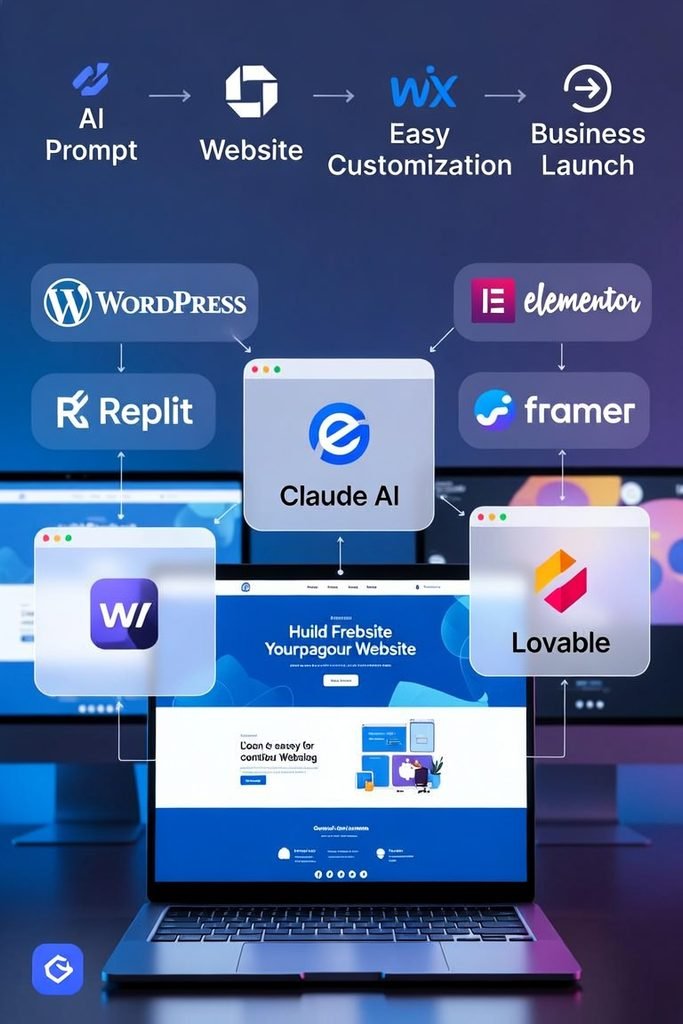
5. Website Building with AI and No-Code Tools
Platforms like WordPress with Elementor, Framer, and Wix now come with AI assistance for layout, copy, and even troubleshooting code. This has made small-business websites faster to build than ever.
But a client isn’t paying for a website that merely exists — they’re paying for one that:
- Loads fast and works on mobile (checked with Google PageSpeed Insights)
- Guides visitors toward booking or buying
- Reflects their brand credibly
- Is structured well enough to rank on Google
Knowing responsive design principles, basic SEO structure, and user experience is what turns an “AI-generated site” into a site that actually earns its owner money.
6. Business Process Automation
Automation platforms like n8n, Make, and Zapier let you connect tools so information flows without manual work. A simple example:
A customer fills out a form (via a tool like Typeform) → their details land in a CRM like Airtable or GoHighLevel → they get an automatic confirmation → the business gets notified on Slack or WhatsApp → a follow-up task is created automatically.
Add AI into the mix — using ChatGPT, Claude, or the OpenAI API inside your automation — and you can also automate:
- Classifying incoming leads
- Summarizing customer messages
- Drafting follow-up emails
- Sorting and tagging data in Google Sheets or Airtable
This work pays well because it directly saves businesses hours of manual admin — but it demands you understand their workflow first, then build the automation around it, not the other way around.
7. AI-Assisted Video Production
Video remains one of the most in-demand content formats, and tools like CapCut, Runway, Pictory, and ElevenLabs now assist with scripting, voiceovers, captions, and even rough editing.
Realistic service offerings include:
- Short-form content for Reels/TikTok/Shorts, edited in CapCut
- Explainer and product videos using Pictory or Synthesia
- Simple promotional ads
- Educational video content with AI voiceovers from ElevenLabs
Standing Out on Freelance Platforms
Marketplaces like Upwork and Fiverr are crowded with generic “I do AI stuff” profiles. That phrasing tells a client nothing. Compare:
“I provide AI services.”
versus
“I create social media content for local restaurants using AI-assisted design and copywriting with Canva and ChatGPT.”
The second version instantly tells a potential client what you do and who you do it for. Specificity beats generality every time — build a small portfolio of sample work before you even start pitching clients.
A Simple 7-Step Starting Plan
- Pick one skill — writing, design, video, SEO, websites, or automation.
- Learn one or two tools deeply — for example, just ChatGPT plus Canva, rather than a dozen subscriptions at once.
- Build sample work using a realistic fictional business as your test case.
- Choose a specific target customer — restaurants, contractors, clinics, coaches, whoever you understand best.
- Start pitching through marketplaces like Fiverr or Upwork, LinkedIn, cold outreach, or your own site.
- Document repetitive tasks as you go, and automate them with n8n or Zapier once you see the pattern.
- Stay focused on outcomes — clients care about results, not which tool produced them.
AI Access Alone Won’t Pay Your Bills
It’s worth being blunt here: owning a ChatGPT subscription or a Zapier account is not an income stream. AI reduces the time a task takes — it doesn’t manufacture demand for your work. You still need a real skill, a genuine problem to solve, and someone willing to pay you to solve it.
The same goes for digital products like ebooks, templates, or prompt packs sold on platforms like Gumroad or Etsy. They only sell if they solve a specific problem for a specific audience — not because “AI” is in the description.
The best results still come from a human hand at the end — using AI to speed up scripting and asset creation, then manually editing in CapCut or Adobe Premiere Pro for pacing, timing, and emotional impact that automated tools consistently miss.
Conclusion
AI tools and digital products have genuinely lowered the barrier to earning money online, but they have not removed the need for focus, patience, and real skill-building. The people seeing the best results are usually the ones who pick one or two AI tools to make money online, learn them deeply, and consistently deliver value to a specific audience, rather than chasing every new tool that appears.

1 thought on “AI Tools to make money Online in 2026: 7 Practical Ways to Earn”